Daily Life and Feed for Our Laying Hens & Meat Chickens
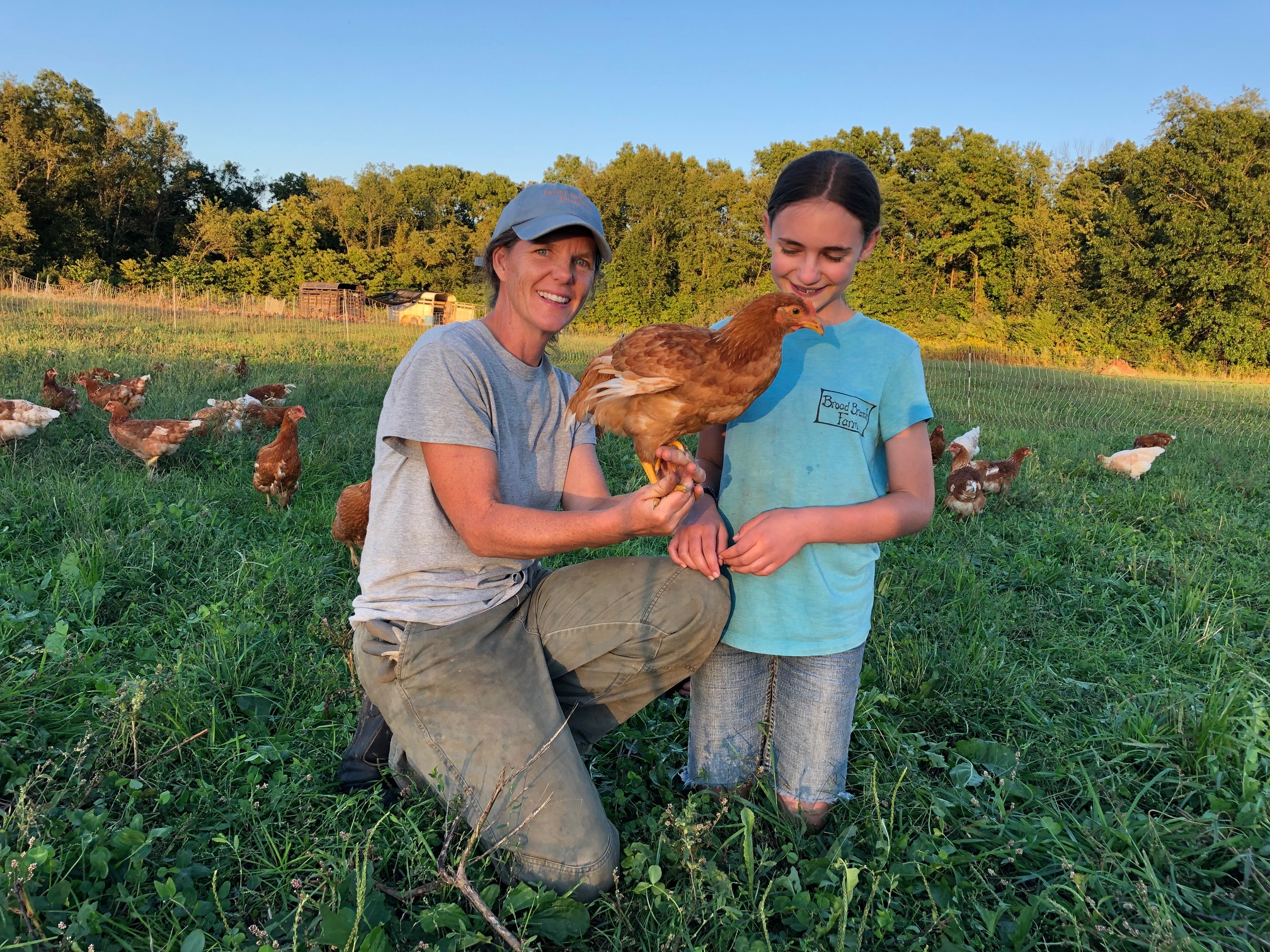
How We Feed Our Chickens
Our hens, as well as our meat chickens, are pastured on certified organic pasture and receive a certified organic grain ration that includes certified corn and soybeans. Certified organic always means no GMO’s and no pesticides. We do not feed raw organic soybeans. They are either roasted or in the form of expeller pressed soybean meal which is the only kind of soybean meal allowed in certified organic feed. NO chemical solvents are allowed in organic production.
Our hens receive no vaccinations, no antibiotics, and no artificial or natural pigments to enhance yolk color like paprika or marigold. The color of the yolk is driven by the nutrition that particular hen ate when she created the egg and it is the natural beta-carotenes in forage that give the yolks the rich deep color. For chickens that are truly pastured, like those on our farm, the yolk color reflects what the hen was eating when the egg was created. If she was avidly foraging on spring grass, that yolk will be a deeper color. If she took a day off and hung out more in the chicken yard, maybe that yolk won’t be quite as orange. But, our hens ALWAYS have access to wander about their pastures.
We have laying hens year round and they are let out in their grazing area(s) nearly 365 days a year. The only time they do not want to forage is when the ground is completely covered in snow which is rare in our now warmer climate. Perhaps a week or two out of the year, the ground may be covered enough to discourage the hens from foraging. That still leaves many, many days in the pasture.
The grazing areas are large and there is plenty of wide open space with electric netting around the perimeter to protect them from predators like foxes and coyotes.


The hens are acclimated to the weather and will forage in rain, wind or even a light snow. They are tough and have a need to be busy looking for the next bug, moth, etc. The pasture provides not just actual forage but insects, worms, dirt, dead and decaying plant material – all contribute to keeping the hens busy and fed. They scratch and hunt through everything in the pasture.
Pasturing is not just for the egg quality. It’s also the best way to raise hens because bored hens start picking on each other just like bored kids! We DO NOT trim our hens’ beaks. They arrive as 2-day old chicks at our farm with fully intact baby beaks and that’s the way they remain. This allows them to fully access all the good nutrition our pastures offer.
The amount of actual green fresh forage in the pastures completely depends on the time of the year and weather with May/June the peak density due to warmth and rain. But, there is some forage year round. Even in early winter, there are clumps of orchard grass the hens have ignored until it’s about the last green thing in the pasture. Here’s a view from December 2025 showing how the laying hens, even in the cold months, are out foraging.


In addition to the pasture, we give the hens round bales of certified organic forage. They love picking through a round bale of “stray” (not an official term!) that includes both hay (dried fresh forage) and straw (dried stems of grain like oats/wheat/rye) harvested from our neighbors certified organic field. These bales are a smorgasbord of seeds, hay, straw and insects. The hens love scratching and harvesting every morsel they can find. It keeps them very busy.
Our meat chickens are raised in a much tighter window from late April – September when the weather is mild and forage most abundant. They are raised very similar to the laying hens with grazing areas and dried forage, if needed. We raise Freedom Ranger meat chickens rather than Cornish Cross because they are a heartier breed that enjoy scratching and foraging. Their varied diet produces a delicious meat chicken with a delightful texture reflecting their active lifestyle.


Creature Comforts
Our chickens have ample space and multiple areas to roam and just “be a chicken”! This includes the ability to take a dust bath. They create multiple dusting areas and can excavate holes with their strong feet and nails. They settle into these holes and use their legs and wings to literally throw dirt and material up and all over themselves. It looks like quite a mess, but once they’re done, they give a few good shakes and the dust is mostly removed. The chickens use the dust baths to discourage any pesky insects that might cause any discomfort.

